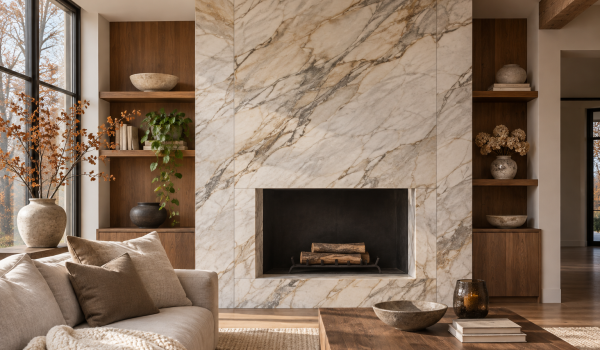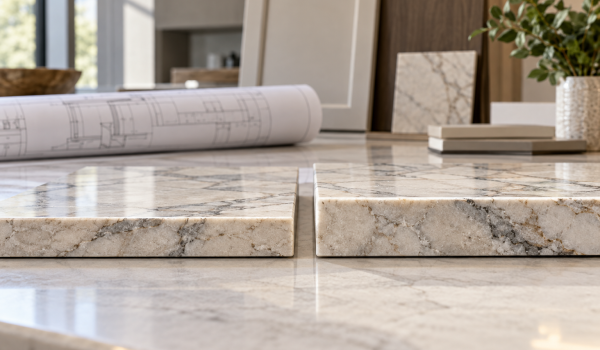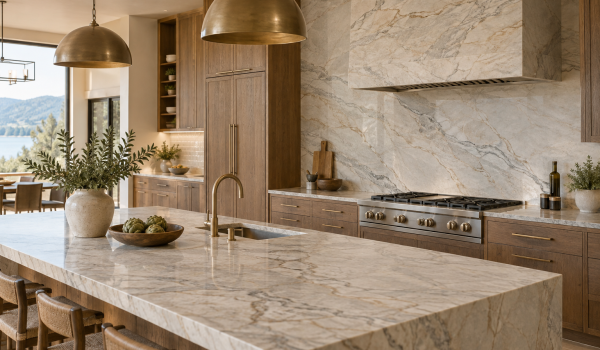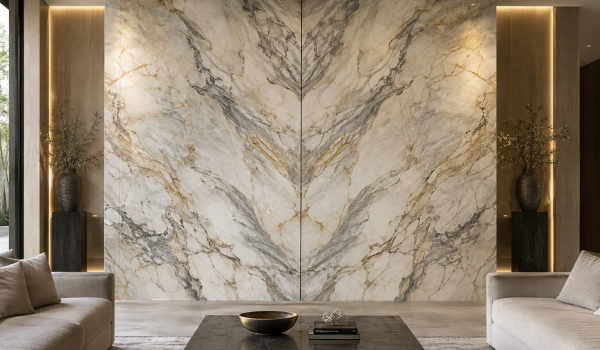
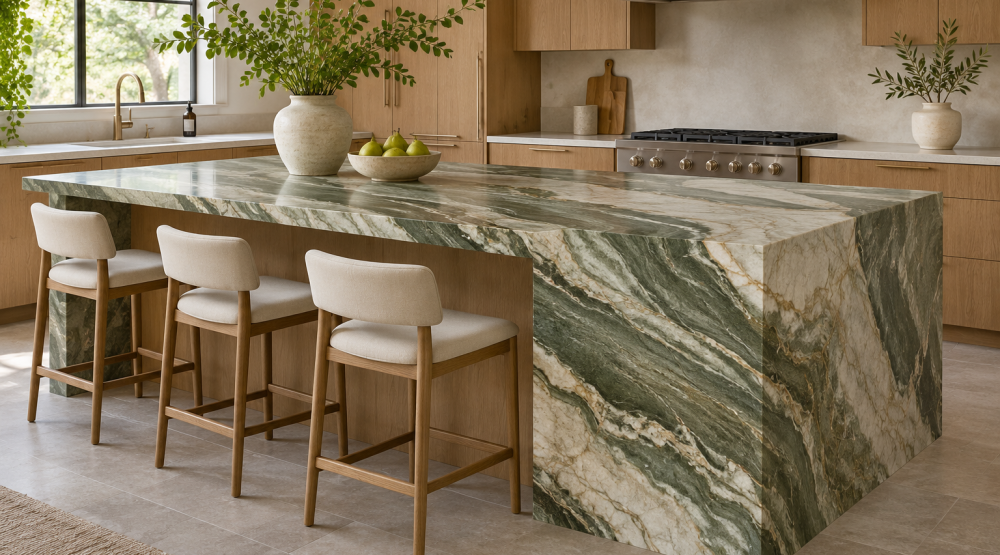
A statement stone kitchen island gives natural color and movement a central place in the room. The most successful design begins with the actual slab and an island layout that lets its best features remain visible.
Start with how you use the kitchen, then compare color, pattern, dimensions, care expectations, and fabrication requirements. The island should work as comfortably for everyday cooking as it does as a visual centerpiece.
Decide What Should Make the Statement
An island does not need the boldest available slab to feel distinctive. The focal point might be deep green color, a warm cream background, broad diagonal veins, crystalline detail, or a quiet stone displayed across a generous uninterrupted surface.
Choose one main quality to lead the design. Consider the view from adjoining rooms as well as the position where you will most often stand, prepare food, or gather with guests.
View the Full Slab Before Finalizing the Palette
A small sample cannot show where large veins, color changes, and mineral features occur. Inspect complete slabs and identify the areas you most want to retain. Take cabinet, flooring, paint, and hardware samples when following our stone showroom selection guide.
Phone photographs help record a shortlist, but physical samples should guide final color decisions. Look at both the overall composition from a distance and the finer markings close up.
Choose a Material for Your Household
Appearance is only part of the decision. Ask about the exact stone’s classification, response to spills, recommended cleaning, sealing when appropriate, and expected signs of use. A busy cooking surface and a lightly used entertaining island may lead to different priorities.
Explore marble slabs and quartzite slabs in person. If comparing carbonate stone with quartzite, the dolomite versus quartzite guide explains why material identity and care expectations deserve attention before purchase.
Balance the Island with Cabinets and Perimeter Surfaces
A richly patterned island can work well with calmer perimeter counters and cabinetry. Alternatively, a quieter slab can bring cohesion to detailed cabinets or a room with several contrasting finishes.
Look for a shared undertone rather than matching every surface exactly. A small warm mineral note may connect with oak, while gray-green movement may relate to painted cabinets. Our guide to pairing stone with kitchen cabinets and wood tones offers a useful way to compare these combinations.
Check Dimensions Before Committing
Ask the fabricator whether the intended island fits within the usable area of the exact slab. Cabinet dimensions alone do not establish the finished stone size: seating, overhangs, edge details, cutouts, and fabrication allowances also matter.
If a seam is needed, plan it with the pattern rather than treating it as a late adjustment. Review what determines kitchen slab quantity before reserving material, particularly when the project includes matching perimeter surfaces or a backsplash.
Plan Waterfall Ends and Vein Direction
A waterfall panel carries the stone down an island end and reveals the pattern vertically. It also adds material, joints, fabrication, and support considerations. Decide early which ends will be visible and whether continuous movement is a priority.
Vein matching and bookmatching create different effects. Our bookmatching and slab layout guide explains the distinction. Have the fabricator map the actual pieces so the direction of movement is understood before cutting.
Choose an Edge That Suits the Design
A simple edge can let the slab pattern lead; a more substantial or shaped edge can add architectural detail. A mitered edge may create the appearance of greater thickness, but it requires appropriate fabrication and detailing.
Discuss actual slab thickness, edge construction, appliance clearances, and seating comfort together. The 2cm versus 3cm stone guide provides questions to take to the fabricator. Support and overhang requirements must be determined for the specific stone and cabinet assembly.
Review the Layout Before Fabrication
Ask to review the proposed slab layout when the fabricator offers that service. Confirm orientation, seam locations, waterfall relationships, and the positions of sink or cooktop openings. Mark the areas of stone you value most and discuss whether the design can preserve them.
- Does the island fit the usable slab dimensions?
- Which direction will the main veins travel?
- Will any major feature disappear into a cutout?
- Where will seams and edge joints fall?
- Have seating support and installation access been reviewed?
Find the Slab That Sets the Direction
Start your shortlist with Terra Stone Gallery’s natural stone inventory. Bring preliminary plans and finish samples, then contact the showroom to discuss available materials. A coordinated conversation between the showroom, designer, and fabricator helps turn a striking slab into a kitchen island that fits the complete project.