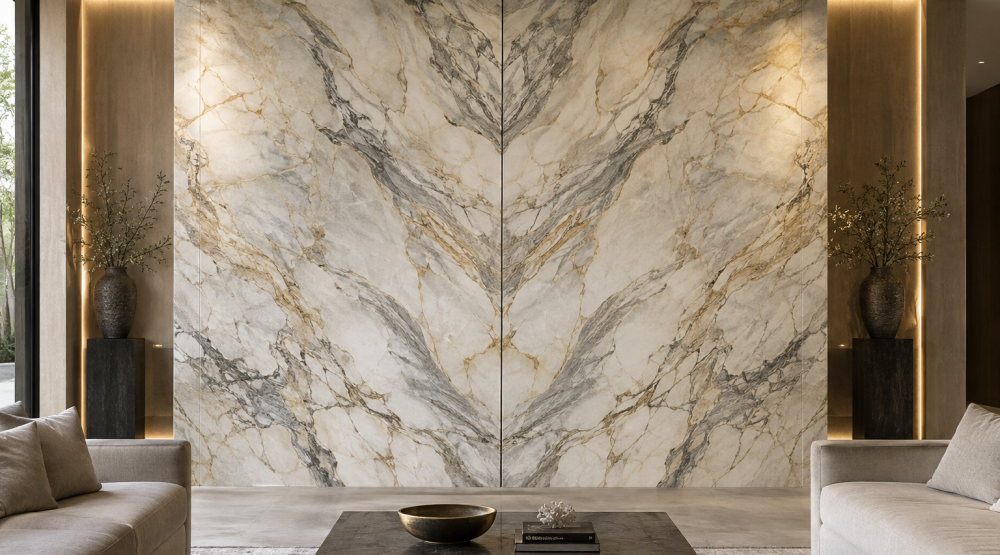
Bookmatched stone slabs turn natural veining into a large-scale design feature. When compatible slabs are opened beside one another, their patterns can create a mirrored composition similar to the pages of an open book.
The effect can be subtle or dramatic depending on the material. Successful bookmatching begins with the right slab pair and continues through careful layout, fabrication, and installation.
What Are Bookmatched Stone Slabs?
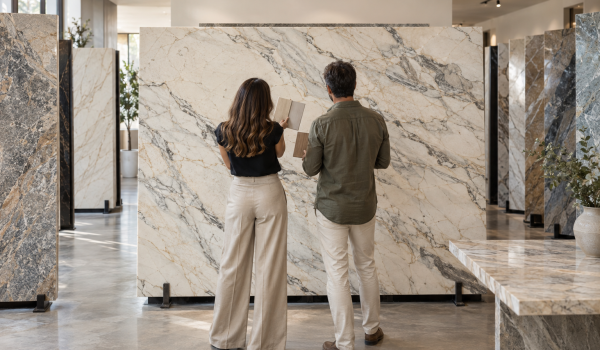
Bookmatching is a layout technique that places two adjoining slab faces together so their markings reflect across a shared line. The visual connection comes from the relationship between consecutive cuts from the same stone block.
Not every pair will form a perfect mirror. Natural variation, slab finishing, cutting, and the portions required for the project can all influence the final alignment. The goal is a deliberate visual relationship rather than a digitally repeated pattern.
Bookmatching Versus Vein Matching
Bookmatching creates a mirrored effect across a center seam. Vein matching is a broader technique in which fabricators arrange separate pieces so the movement appears to continue from one surface to another.
For example, a vein may be carried from a countertop onto a waterfall panel without forming a mirror image. Both methods require planning, but they produce different compositions. Clarifying the desired effect early helps the showroom, designer, and fabricator communicate accurately.
Which Stones Work Well for Bookmatching?
Materials with distinct directional movement tend to create the most visible effect. Many marbles and quartzites are strong candidates, as are selected onyx, granite, and other natural stones. A quieter slab can also be bookmatched, producing a softer and more restrained result.
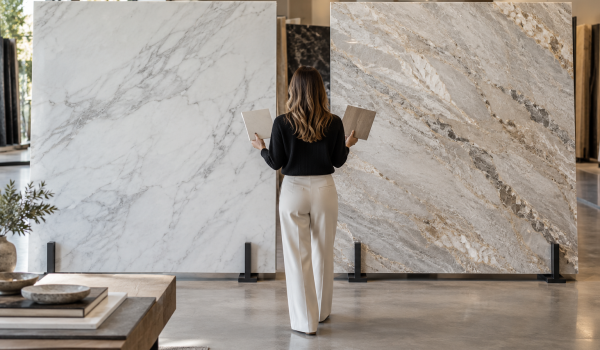
The individual slabs matter more than the category name. View the complete pair together and assess the center line, color consistency, movement, and usable dimensions. Follow the stone showroom selection checklist when comparing full slabs in person. Browse Terra Stone Gallery’s current marble slabs and quartzite slabs to see the range of natural patterns available.
Where Bookmatched Stone Makes the Greatest Impact
Bookmatching is especially effective when the stone can be viewed as a complete composition. Popular applications include:
- Full-height kitchen backsplashes
- Fireplace surrounds and feature walls
- Large shower walls
- Statement islands and waterfall ends
- Bar fronts and hospitality installations
- Reception walls and commercial focal points
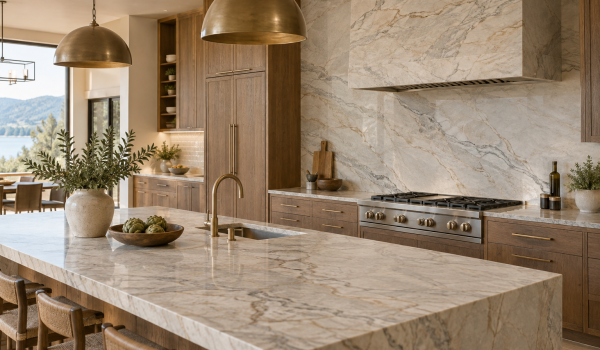
A large vertical installation often displays more of the mirrored pattern than a countertop interrupted by sinks and appliances. The best application depends on the slab dimensions and the architecture of the room.
Plan the Layout Before Cutting
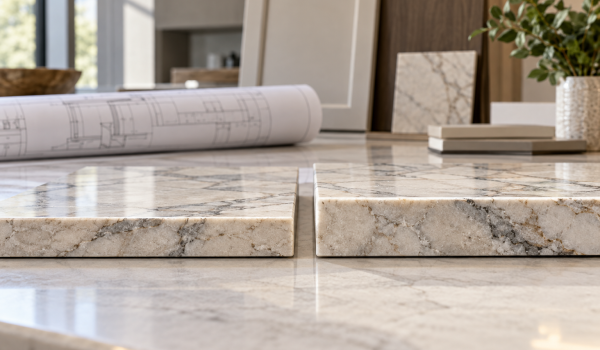
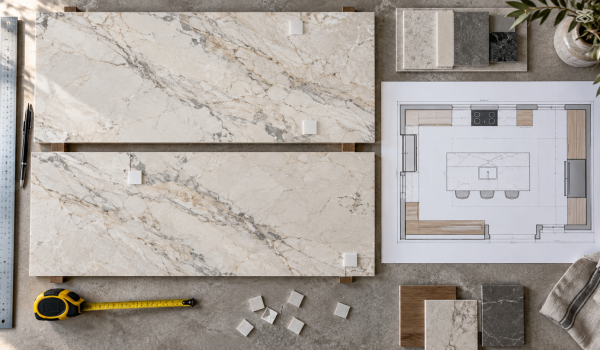
The full design should be mapped before fabrication begins. Sink and cooktop openings, outlets, seams, corners, edge profiles, and structural conditions can change which parts of the slab remain visible.
Discuss the visual center of the composition with your designer and fabricator. It may align with a range, fireplace, vanity, doorway, or another architectural feature. Review a slab layout or digital preview when the fabricator offers one, and approve the orientation before cutting.
Allow for Slab Quantity and Usable Area
A bookmatched installation may require more material than a layout focused only on maximum yield. Preserving the mirrored relationship can limit how pieces are rotated or nested. Exact requirements depend on slab size, finished dimensions, cutouts, and the number of surfaces involved.
Ask your fabricator to confirm the quantity before reserving material. Several layout variables affect how many stone slabs a kitchen may need. If the design calls for multiple bookmatched sections, verify how each pair will relate and whether additional sequential slabs are available.
Let the Natural Pattern Lead the Design
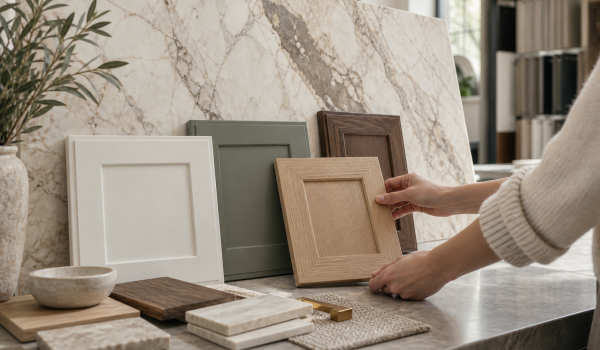
Bookmatched stone is most successful when cabinets, fixtures, and surrounding finishes support the composition. A highly active stone may become the room’s primary artwork, while a quieter pair can add symmetry without dominating the space.
To evaluate slabs for a bookmatched project, explore Terra Stone Gallery’s current stone inventory and contact the showroom. Bring preliminary dimensions and project drawings so the selected slabs can be reviewed with the intended layout in mind.