A kitchen backsplash can act as a quiet background or become one of the room’s defining features. Tile offers pattern, texture, and modular flexibility. A full-height stone backsplash creates a broad, continuous surface that can extend the countertop material up the wall.
Neither choice is universally better. The right decision depends on the desired visual effect, the kitchen layout, the selected material, maintenance preferences, and the level of fabrication involved.
What Is a Full-Height Stone Backsplash?
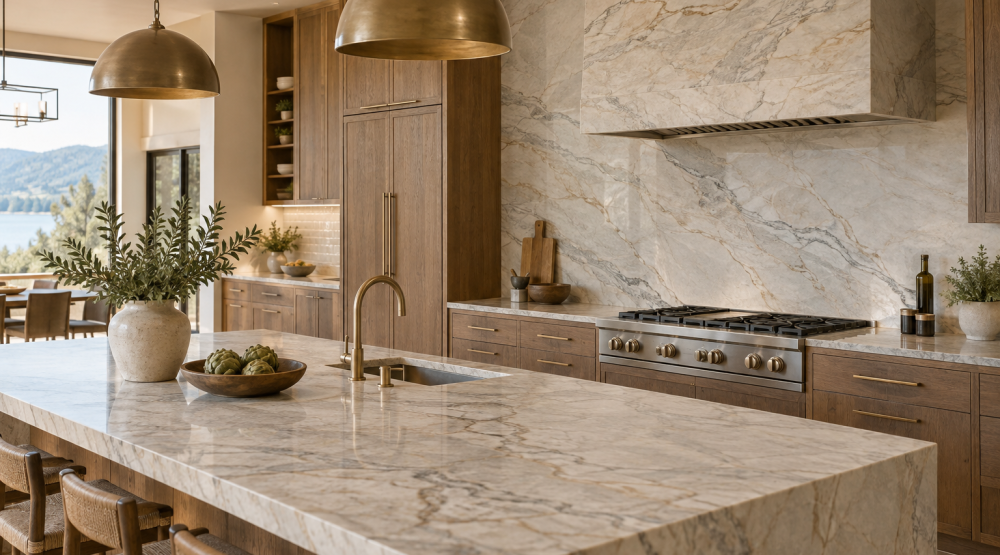
A full-height slab backsplash typically runs from the countertop to the upper cabinets, hood, shelving, or ceiling. It may use the same stone as the countertop or a coordinating slab selected as a separate feature.
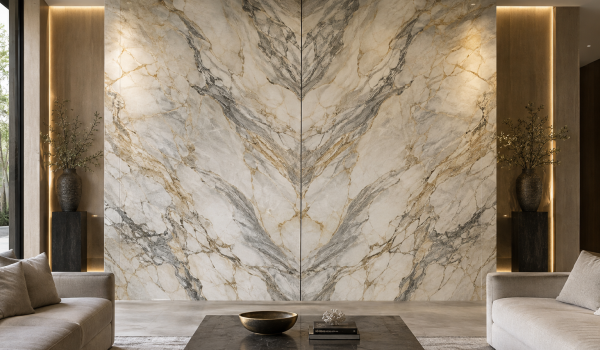
Because the surface uses large pieces, the natural pattern becomes part of the architecture. Veins can be centered behind a range, carried across a wall, or aligned with countertop and waterfall sections.
How a Stone Slab Backsplash Changes the Look
A slab creates fewer visual breaks than small-format tile. This can make a compact kitchen feel calmer and allow the stone’s veining and color variation to remain uninterrupted. Dramatic marble or quartzite can create a focal wall, while a softly patterned stone can produce a restrained, tonal background.
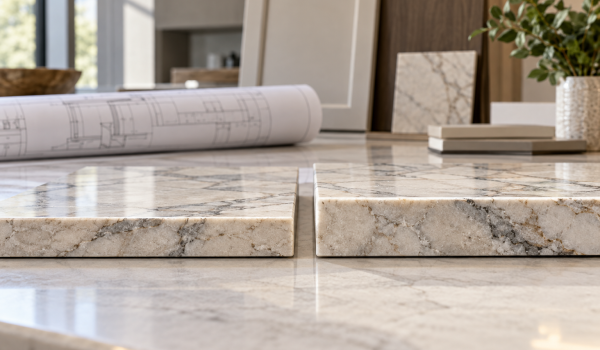
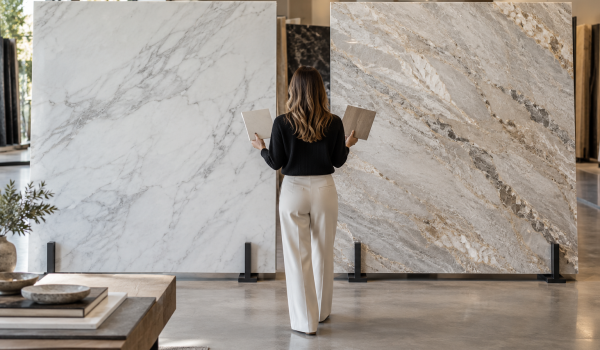
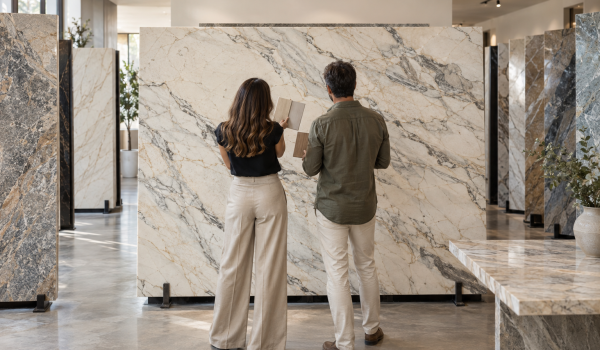
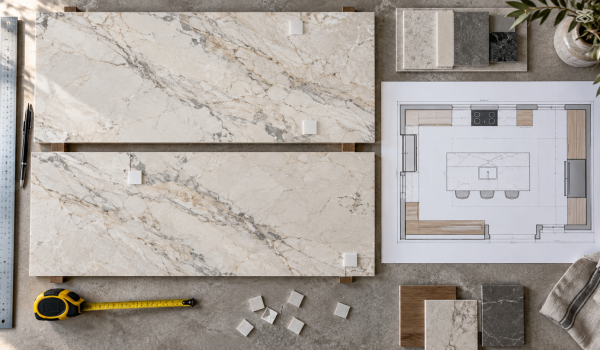
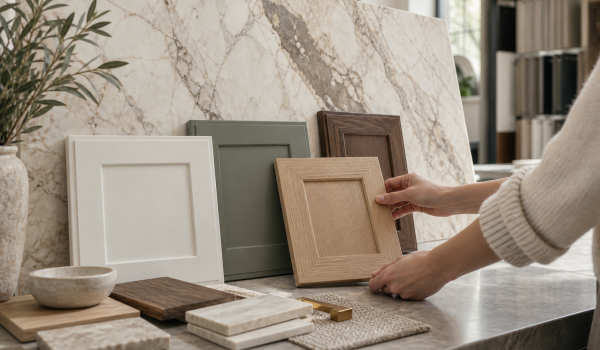
The effect depends on the exact slab. Viewing the full piece is important because a sample cannot show how the pattern will appear across a large vertical area. Use our natural stone showroom guide to prepare for that comparison.
Where Tile Offers More Flexibility
Tile introduces design through shape, grout color, layout, and repetition. It can be a useful choice when the backsplash should contrast with the countertop or when the design calls for a handcrafted or highly textured surface.
Modular pieces can also be easier to adapt around irregular walls and detailed architectural conditions. However, tile creates grout lines, which become part of both the appearance and ongoing maintenance of the backsplash.
Compare Cleaning and Maintenance
A slab backsplash has relatively few joints, giving spills and cooking residue fewer grout lines to reach. The care routine still depends on the material. Natural stone may require products and maintenance appropriate to its mineral composition and finish.
Tile maintenance varies according to the tile and grout selected. Porous grout may require additional attention, while other systems may be easier to maintain. Review care requirements for the complete assembly rather than judging the surface material alone. Terra Stone Gallery’s stone care guidance provides a useful starting point for natural stone surfaces.
Account for Outlets, Corners, and Fabrication
Every outlet, switch, window, shelf, and corner affects a slab backsplash layout. Precise templating and fabrication are necessary, particularly when veins need to align or continue around a return.
Decide early whether outlets should be relocated, minimized, or integrated into the design. These decisions involve the designer, fabricator, electrician, installer, and other appropriate trades. Final feasibility must be confirmed before the slab is cut.
Should the Countertop and Backsplash Match?
Using the same material can create a unified surface and may allow the backsplash to continue the countertop’s movement. A bookmatched stone composition can make the backsplash an even stronger focal point when compatible slabs and the layout allow it. This approach works particularly well when enough compatible material is available and the slab layout is planned as a whole. Review the factors that determine kitchen slab quantity before reserving material.
A contrasting backsplash can be equally successful. A quiet countertop can support a more expressive wall, or a dramatic island can be balanced by a simpler perimeter. Evaluate all visible surfaces together so they complement rather than compete with one another.
Choosing the Right Backsplash for Your Kitchen
Choose a full-height stone backsplash when you want continuous pattern, fewer grout lines, and a custom architectural statement. Choose tile when modularity, detailed pattern, texture, or contrast is central to the design.
Before deciding, compare the materials in person and ask a fabricator to review the wall conditions and proposed layout. Explore natural stone slabs, porcelain options, and contact Terra Stone Gallery to begin selecting a backsplash material for your project.