
A natural stone fireplace surround can give a room a clear focal point through color, veining, texture, and scale. The best selection starts with the fireplace itself: its model, fuel type, installation instructions, surrounding structure, and the surfaces the stone will cover.
Once those conditions are understood, compare complete slabs and plan the composition with your designer and fabricator. A beautiful stone needs a suitable installation system as well as a thoughtful layout.
Define the Surround, Hearth, and Feature Wall
The surround frames the fireplace opening. The hearth is the surface at its base, while a feature wall may extend well above or beyond the opening. These areas can have different requirements and do not automatically need the same material or thickness.
Bring the fireplace manufacturer’s specifications and preliminary drawings to the project team. Clearances, temperature exposure, floor and wall support, and approved finishing materials must be checked for the particular appliance. Decorative stone should never be assumed suitable for direct flame exposure.
Compare Materials by the Exact Slab
Marble
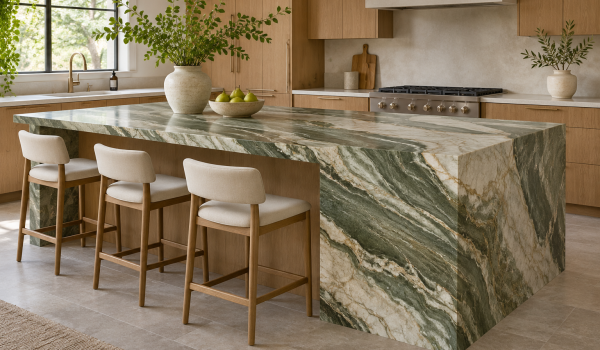
Marble offers everything from quiet white and gray movement to expressive gold, burgundy, green, and charcoal patterns. It can create a restrained frame or an architectural centerpiece. Examine the particular stone and finish, and ask the fabricator to confirm suitability for the proposed location. Explore Terra Stone Gallery’s marble slabs to begin comparing visual directions.
Quartzite and Granite
Quartzite can bring crystalline depth and sweeping movement; granite can offer granular detail, flowing patterns, or strong contrast. Neither category name replaces a review of the exact material and fireplace assembly. Browse the quartzite collection alongside the other stones in the showroom.
Dolomite
Dolomite may appeal when you want a softer, marble-like composition. Discuss its mineral characteristics and maintenance with the supplier, particularly where cleaning products or spills may reach the hearth. Our dolomite and quartzite comparison explains why accurate stone identification matters.
Porcelain as an Alternative
Porcelain is a manufactured surface rather than natural stone. It may provide another visual option, but fireplace use must be approved for the specific product and installation system. Review the manufacturer’s technical documentation before selecting from the porcelain collection.
Choose the Visual Scale
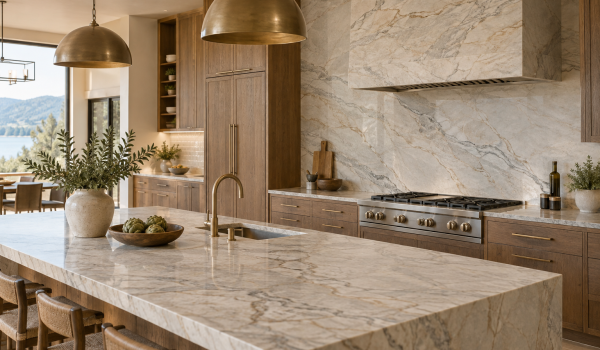
A narrow surround lets furniture and artwork lead the room. A full-height installation gives the stone a larger architectural role. Before choosing, consider ceiling height, the width of the fireplace opening, adjacent windows, shelving, and how much of the wall is visible from the main seating area.
Compare quiet and expressive slabs at full size. A dramatic vein that looks beautiful on the rack may fall behind the firebox opening once cut. The layout should identify which markings will remain visible.
Plan Veins, Bookmatching, and Seams Together
Decide whether movement should travel vertically, horizontally, or across adjoining panels. Compatible sequential slabs can create a mirrored composition, as explained in our bookmatched stone guide.
Seams are both visual and technical decisions. Do not require a single uninterrupted piece around the opening before the fabricator and fireplace installer have reviewed it. Panel shape, cutouts, handling, thermal movement, and the installation system can affect the safe layout. Approve the proposed arrangement before cutting.
Consider Finish, Thickness, and Care
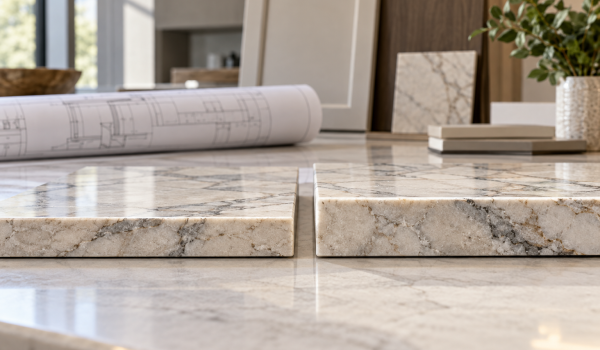
A polished finish reflects more light, while a honed finish gives a softer appearance. Compare physical samples in the room’s lighting and ask how soot, dust, fingerprints, or cleaning may show on the chosen surface.
Thickness affects weight and detailing, but it does not determine the complete support strategy. Our 2cm versus 3cm slab guide outlines the questions to discuss. Use stone-appropriate cleaning products, and confirm any sealing recommendation for the exact material.
Coordinate Professional Installation Early
Stone surrounds require professional assessment of the supporting structure, anchoring, material weight, and handling. Stone Federation’s fireplace surround guidance emphasizes trained installers and secure fixing. This UK guidance is useful background; the project must follow applicable local requirements and the fireplace manufacturer’s instructions.
Confirm responsibility for field measurements, material approval, cut planning, installation, and final inspection. For an existing fireplace, have its condition and specifications reviewed before designing the new surround.
Bring Your Fireplace Plans to the Showroom
Bring appliance specifications, dimensions, room photographs, and nearby finish samples. The showroom selection checklist will help you prepare. Then contact Terra Stone Gallery to discuss available slabs and coordinate material selection with your project team.