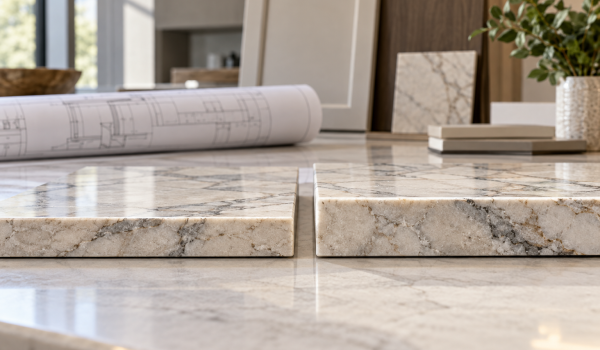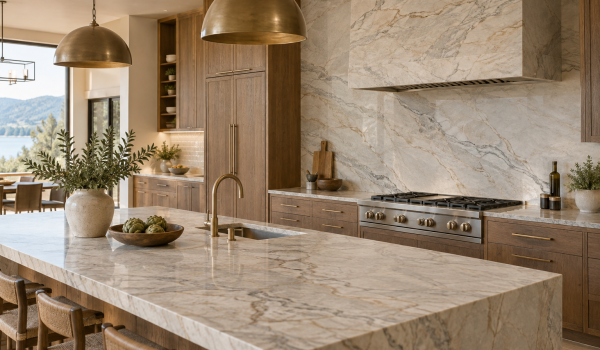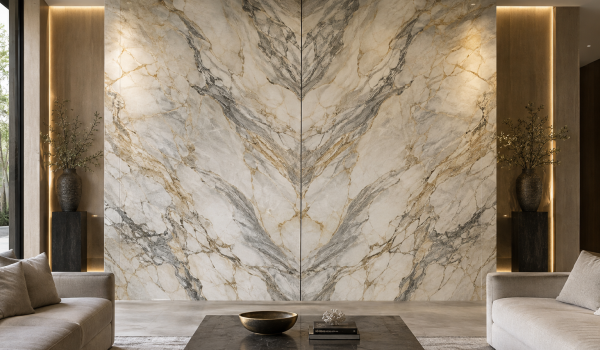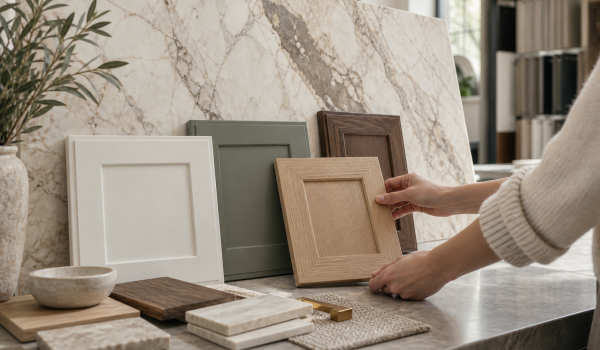

Selecting natural stone is different from choosing a manufactured surface from a small sample. Every slab has its own color shifts, veins, mineral markings, and areas of movement. Seeing the full slab helps you understand how those details will read across a countertop, island, wall, or fireplace.
A productive showroom visit is about more than finding a color you like. It is also the time to compare complete slabs, consider how the pattern will fit your layout, and gather the information your designer and fabricator will need.
What to Bring to the Stone Showroom
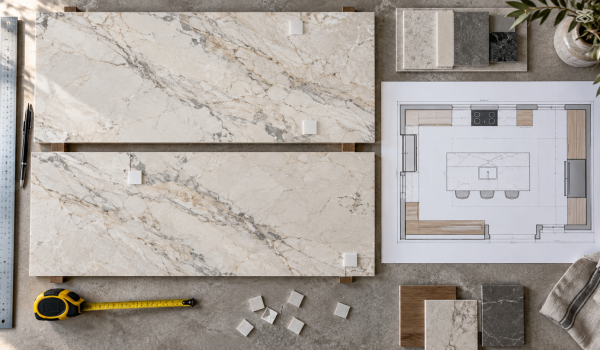
A few project details make it much easier to evaluate stone in context. Bring cabinet, flooring, paint, hardware, and backsplash samples whenever possible. Photographs of the room in natural and artificial light are also useful.
You do not need final fabrication drawings to begin looking, but approximate measurements and a simple floor plan can help the showroom team understand the scale of the project. Tell them if the design includes a large island, waterfall edge, full-height stone backsplash, fireplace, shower wall, or another feature where the slab pattern will be especially visible.
- Cabinet door or finish sample
- Flooring, tile, paint, and hardware samples
- Room photographs and inspiration images
- Approximate dimensions or preliminary plans
- A list of surfaces and special design features
View the Entire Slab, Not Just a Sample
A small sample can introduce the general color of a material, but it cannot represent the complete pattern of a natural stone slab. Step back far enough to see the overall composition, then move closer to examine the finer details.
Look at how the movement travels from one end to the other. Consider whether the pattern feels quiet, linear, cloudlike, or dramatic. Imagine where the sink, cooktop, seams, and edges may fall. A section you barely notice on the rack could become the focal point once the slab is cut.
Check Color and Undertones
White and neutral stones often contain subtle warm or cool undertones. Compare the slab directly with your cabinet and flooring samples rather than relying on memory or a phone screen. Our guide to pairing natural stone with kitchen cabinets explains how to evaluate undertones and contrast. Cream, gray, taupe, gold, green, and blue notes may become more apparent when materials are placed side by side.
Lighting matters as well. Ask to view the stone from more than one angle and take photographs for reference. Treat phone photos as planning aids, not exact color records, because screens and cameras can shift the appearance.
Consider Vein Direction and Layout
Directional veining can create a strong sense of movement. Before reserving a slab, think about how that movement could travel across an island or continue onto a waterfall edge or backsplash. If the project needs more than one slab, review what determines slab quantity and ask whether coordinating or sequential slabs are available. Sequential material may also create opportunities for a bookmatched stone layout.
The final layout belongs in the hands of the fabricator. The showroom visit is the right time to identify the parts of the slab you love and communicate which visual features matter most.
Ask About the Stone and Its Intended Use
Stone names alone do not tell you everything about performance or care. Explain where the material will be installed and how the surface will be used. Ask about the stone type, finish, current slab dimensions, visible characteristics, and recommended care.
For kitchens and other active spaces, discuss your expectations regarding patina, staining, scratching, and etching with both the supplier and fabricator. Natural stone varies, and suitability depends on the particular material, finish, application, and household.
Confirm the Next Steps Before Reserving
Before making a decision, confirm how the reservation process works and what information is required from your fabricator. Ask whether the exact slab or slabs you viewed will be identified for the project. The fabricator should verify measurements, slab quantity, seam placement, edge details, and installation requirements before material is cut.
Explore Natural Stone in Person
The best slab is one that works with the room, supports the intended application, and gives your fabricator enough material to execute the design. Browse Terra Stone Gallery’s natural stone slab inventory before your visit, then contact our team to discuss your project and the materials you would like to see.