Dolomite vs. Quartzite: Which Natural Stone Is Right for Your Kitchen?

Designer comparing two pale natural stone slabs in a showroom

Dolomite and quartzite can both bring natural movement, depth, and one-of-a-kind character to a kitchen. They are not interchangeable, however. Their mineral composition, response to everyday use, and care expectations can differ, and even stones sold under the same general category can vary.

The short answer is that quartzite often appeals to homeowners prioritizing a hard, quartz-rich natural surface, while dolomite can offer marble-like beauty with properties that differ from traditional calcite marble. The right choice depends on the exact slab, finish, application, and how you expect the kitchen to age.

What Is the Difference Between Dolomite and Quartzite?

Quartzite is a metamorphic rock formed when sandstone is transformed by heat and pressure. The Natural Stone Institute’s quartzite overview explains that quartzite can have exceptional strength, density, and hardness. Those properties are tied to its quartz-rich composition and geologic formation.

Dolomite is a carbonate-based stone containing calcium-magnesium carbonate. According to the Natural Stone Institute’s discussion of dolomitic stone, dolomites generally have higher density, lower absorption, and greater strength and abrasion resistance than calcium-carbonate-based limestones. That does not make every dolomite identical or suitable for every countertop; it means the mineral composition matters when evaluating performance.

How Their Appearance Compares

Many dolomite slabs feature soft white, cream, or gray backgrounds with flowing veins that can resemble marble. The look can be elegant and restrained or highly expressive depending on the quarry and block.

Quartzite offers an equally broad visual range. Some slabs are quiet and tonal, while others contain strong diagonal movement, crystalline areas, saturated color, or dramatic contrast. Terra Stone Gallery’s quartzite slab collection shows how different individual slabs within one stone category can be.

Do not make the decision from a name or small sample alone. View the full slab and compare its dominant color, undertones, movement, finish, and natural characteristics. Our guide to selecting a natural stone slab in the showroom explains what to bring and what to inspect.

Scratch and Abrasion Considerations

Quartzite’s quartz-rich composition can make it highly resistant to abrasion, but performance varies with the specific stone. Dolomite is generally not evaluated as if it were quartzite and may develop signs of use differently.

Regardless of the material, cutting boards and ordinary surface protection remain good practice. A countertop should be selected around realistic household habits rather than the expectation that any natural stone is completely immune to wear.

Acids, Etching, and Kitchen Patina

This is one of the most important distinctions to discuss. Dolomite is a carbonate stone, so acidic substances may affect its surface. Citrus, vinegar, wine, tomato, and some cleaners can create a dull mark known as etching. A sealer may help reduce absorption and staining, but sealing does not make an acid-sensitive mineral resistant to etching.

True quartzite is not a carbonate stone and generally responds differently to mild household acids. However, trade names and stone classifications are not always used consistently. Ask the supplier and fabricator about the exact material, and avoid relying on a label alone when etching resistance is a deciding factor.

Staining and Sealing

Stain resistance depends on absorption, finish, sealing, spills, and maintenance. Both dolomite and quartzite may be sealed when appropriate for the material and installation. The correct product and schedule should come from the stone supplier, sealer manufacturer, and fabricator rather than a universal timetable.

Clean spills promptly and use products formulated for natural stone. Terra Stone Gallery’s stone care guidance provides a practical starting point, and our article on caring for marble and quartzite explains everyday habits that help protect kitchen and bath surfaces.

Which Stone Is Better for a Busy Kitchen?

Quartzite may be the stronger candidate when the priority is a hard natural surface and the household wants to minimize concern about acid etching. The specific slab still needs to be identified correctly and reviewed for the intended application.

Dolomite may suit a homeowner who loves a marble-like appearance and accepts that a carbonate-based surface can develop a lived-in patina. It can be a rewarding choice when the care expectations are understood before installation.

Neither answer should be based on category alone. Finish, color, slab condition, layout, edge details, fabrication, support, and maintenance all contribute to the result.

Questions to Ask Before Choosing

  • How has this exact material been classified?
  • Is the stone expected to react to mild household acids?
  • What finish is on the slab, and how may that finish show wear?
  • Is sealing recommended, and which products are appropriate?
  • Are enough coordinating slabs available for the planned layout?
  • Does the fabricator have experience with this material?

Compare Dolomite and Quartzite Slabs in Person

The most useful comparison happens at full-slab scale. Examine the exact materials, discuss your household and intended application, and have the fabricator confirm the layout and installation requirements.

Browse Terra Stone Gallery’s current natural stone inventory, or contact the showroom to discuss dolomite, quartzite, and other natural stone options for your project.

How to Select a Natural Stone Slab at the Showroom

Two people comparing cabinet samples with a full natural stone slab in a showroom

Selecting natural stone is different from choosing a manufactured surface from a small sample. Every slab has its own color shifts, veins, mineral markings, and areas of movement. Seeing the full slab helps you understand how those details will read across a countertop, island, wall, or fireplace.

A productive showroom visit is about more than finding a color you like. It is also the time to compare complete slabs, consider how the pattern will fit your layout, and gather the information your designer and fabricator will need.

What to Bring to the Stone Showroom

A few project details make it much easier to evaluate stone in context. Bring cabinet, flooring, paint, hardware, and backsplash samples whenever possible. Photographs of the room in natural and artificial light are also useful.

You do not need final fabrication drawings to begin looking, but approximate measurements and a simple floor plan can help the showroom team understand the scale of the project. Tell them if the design includes a large island, waterfall edge, full-height stone backsplash, fireplace, shower wall, or another feature where the slab pattern will be especially visible.

  • Cabinet door or finish sample
  • Flooring, tile, paint, and hardware samples
  • Room photographs and inspiration images
  • Approximate dimensions or preliminary plans
  • A list of surfaces and special design features

View the Entire Slab, Not Just a Sample

A small sample can introduce the general color of a material, but it cannot represent the complete pattern of a natural stone slab. Step back far enough to see the overall composition, then move closer to examine the finer details.

Look at how the movement travels from one end to the other. Consider whether the pattern feels quiet, linear, cloudlike, or dramatic. Imagine where the sink, cooktop, seams, and edges may fall. A section you barely notice on the rack could become the focal point once the slab is cut.

Check Color and Undertones

White and neutral stones often contain subtle warm or cool undertones. Compare the slab directly with your cabinet and flooring samples rather than relying on memory or a phone screen. Our guide to pairing natural stone with kitchen cabinets explains how to evaluate undertones and contrast. Cream, gray, taupe, gold, green, and blue notes may become more apparent when materials are placed side by side.

Lighting matters as well. Ask to view the stone from more than one angle and take photographs for reference. Treat phone photos as planning aids, not exact color records, because screens and cameras can shift the appearance.

Consider Vein Direction and Layout

Directional veining can create a strong sense of movement. Before reserving a slab, think about how that movement could travel across an island or continue onto a waterfall edge or backsplash. If the project needs more than one slab, review what determines slab quantity and ask whether coordinating or sequential slabs are available. Sequential material may also create opportunities for a bookmatched stone layout.

The final layout belongs in the hands of the fabricator. The showroom visit is the right time to identify the parts of the slab you love and communicate which visual features matter most.

Ask About the Stone and Its Intended Use

Stone names alone do not tell you everything about performance or care. Explain where the material will be installed and how the surface will be used. Ask about the stone type, finish, current slab dimensions, visible characteristics, and recommended care.

For kitchens and other active spaces, discuss your expectations regarding patina, staining, scratching, and etching with both the supplier and fabricator. Natural stone varies, and suitability depends on the particular material, finish, application, and household.

Confirm the Next Steps Before Reserving

Before making a decision, confirm how the reservation process works and what information is required from your fabricator. Ask whether the exact slab or slabs you viewed will be identified for the project. The fabricator should verify measurements, slab quantity, seam placement, edge details, and installation requirements before material is cut.

Explore Natural Stone in Person

The best slab is one that works with the room, supports the intended application, and gives your fabricator enough material to execute the design. Browse Terra Stone Gallery’s natural stone slab inventory before your visit, then contact our team to discuss your project and the materials you would like to see.

Bookmatched Stone Slabs: A Guide to Veining, Layout, and Design

Bookmatched natural stone slabs with mirrored gray and gold veining

Bookmatched stone slabs turn natural veining into a large-scale design feature. When compatible slabs are opened beside one another, their patterns can create a mirrored composition similar to the pages of an open book.

The effect can be subtle or dramatic depending on the material. Successful bookmatching begins with the right slab pair and continues through careful layout, fabrication, and installation.

What Are Bookmatched Stone Slabs?

Bookmatching is a layout technique that places two adjoining slab faces together so their markings reflect across a shared line. The visual connection comes from the relationship between consecutive cuts from the same stone block.

Not every pair will form a perfect mirror. Natural variation, slab finishing, cutting, and the portions required for the project can all influence the final alignment. The goal is a deliberate visual relationship rather than a digitally repeated pattern.

Bookmatching Versus Vein Matching

Bookmatching creates a mirrored effect across a center seam. Vein matching is a broader technique in which fabricators arrange separate pieces so the movement appears to continue from one surface to another.

For example, a vein may be carried from a countertop onto a waterfall panel without forming a mirror image. Both methods require planning, but they produce different compositions. Clarifying the desired effect early helps the showroom, designer, and fabricator communicate accurately.

Which Stones Work Well for Bookmatching?

Materials with distinct directional movement tend to create the most visible effect. Many marbles and quartzites are strong candidates, as are selected onyx, granite, and other natural stones. A quieter slab can also be bookmatched, producing a softer and more restrained result.

The individual slabs matter more than the category name. View the complete pair together and assess the center line, color consistency, movement, and usable dimensions. Follow the stone showroom selection checklist when comparing full slabs in person. Browse Terra Stone Gallery’s current marble slabs and quartzite slabs to see the range of natural patterns available.

Where Bookmatched Stone Makes the Greatest Impact

Bookmatching is especially effective when the stone can be viewed as a complete composition. Popular applications include:

  • Full-height kitchen backsplashes
  • Fireplace surrounds and feature walls
  • Large shower walls
  • Statement islands and waterfall ends
  • Bar fronts and hospitality installations
  • Reception walls and commercial focal points

A large vertical installation often displays more of the mirrored pattern than a countertop interrupted by sinks and appliances. The best application depends on the slab dimensions and the architecture of the room.

Plan the Layout Before Cutting

The full design should be mapped before fabrication begins. Sink and cooktop openings, outlets, seams, corners, edge profiles, and structural conditions can change which parts of the slab remain visible.

Discuss the visual center of the composition with your designer and fabricator. It may align with a range, fireplace, vanity, doorway, or another architectural feature. Review a slab layout or digital preview when the fabricator offers one, and approve the orientation before cutting.

Allow for Slab Quantity and Usable Area

A bookmatched installation may require more material than a layout focused only on maximum yield. Preserving the mirrored relationship can limit how pieces are rotated or nested. Exact requirements depend on slab size, finished dimensions, cutouts, and the number of surfaces involved.

Ask your fabricator to confirm the quantity before reserving material. Several layout variables affect how many stone slabs a kitchen may need. If the design calls for multiple bookmatched sections, verify how each pair will relate and whether additional sequential slabs are available.

Let the Natural Pattern Lead the Design

Bookmatched stone is most successful when cabinets, fixtures, and surrounding finishes support the composition. A highly active stone may become the room’s primary artwork, while a quieter pair can add symmetry without dominating the space.

To evaluate slabs for a bookmatched project, explore Terra Stone Gallery’s current stone inventory and contact the showroom. Bring preliminary dimensions and project drawings so the selected slabs can be reviewed with the intended layout in mind.

How to Choose the Perfect Marble Slab for a Luxury Kitchen

Arabescato Apuano Fantastico 2

A luxury kitchen begins with exceptional materials, and few surfaces make a statement quite like marble. For centuries, marble has been associated with timeless architecture, fine craftsmanship, and sophisticated interior design. Today, homeowners, designers, and contractors continue to choose marble for its unique beauty and ability to transform ordinary kitchens into extraordinary spaces.

At Terra Stone Gallery, we offer luxury marble slabs in Chicago sourced from some of the world’s most respected stone-producing regions, including Italy and Greece. Because every slab is naturally unique, selecting the right marble requires more than simply choosing a color. Understanding veining, movement, finish, and overall design goals can help ensure you find the perfect slab for your project.

Understand That Every Marble Slab Is Unique

One of marble’s greatest strengths is that no two slabs are identical. Unlike manufactured materials, natural stone develops over thousands of years, creating distinctive patterns, veining, and color variations that cannot be replicated.

This means the exact slab you select matters. While photos may provide inspiration, viewing full slabs in person allows you to appreciate the movement and character of the stone before making a final decision.

Many homeowners visit a marble showroom expecting to choose a color, but the most successful projects begin by selecting the actual slab that will become the centerpiece of the kitchen.

Consider the Overall Design Style of Your Home

The best marble selection complements the overall aesthetic of the home. Modern kitchens often feature cleaner veining and brighter backgrounds, while traditional designs may benefit from more dramatic movement and warmer tones.

Some popular design approaches include:

  • Bright white marble for contemporary spaces
  • Bold veining for statement kitchen islands
  • Soft gray movement for transitional designs
  • Warm-toned marble for classic luxury interiors

Choosing a marble slab that works with cabinetry, flooring, lighting, and hardware creates a cohesive design that feels intentional and timeless.

Think Beyond the Countertops

Many luxury homes now incorporate marble throughout the kitchen rather than limiting it to countertops alone. Designers frequently use matching or complementary marble for:

  • Waterfall islands
  • Full-height backsplashes
  • Feature walls
  • Butler’s pantries
  • Adjacent bar areas

By selecting slabs with sufficient quantity and consistent movement, homeowners can create a seamless visual experience throughout the space.

Evaluate Slab Movement and Veining

Veining is often the defining characteristic of a premium marble slab. Some projects call for dramatic movement that immediately captures attention, while others benefit from a more subtle appearance.

There is no right or wrong choice. The key is understanding how the stone will interact with the rest of the kitchen design.

Large kitchen islands often become focal points, making dramatic veining highly desirable. In contrast, smaller kitchens may benefit from a more understated selection that helps maintain visual balance.

Work With Experienced Professionals

Choosing marble is only one part of a successful project. Proper fabrication and installation play an equally important role in achieving a flawless finished result.

Contractors, fabricators, and designers can help evaluate slab layouts, seam placement, edge profiles, and installation requirements. Working with experienced professionals ensures the natural beauty of the stone is showcased to its fullest potential.

At Terra Stone Gallery, we regularly work with contractors, fabricators, architects, and interior designers throughout the Chicago area and can help connect clients with experienced professionals when needed.

Visit a Marble Showroom Before Making a Final Decision

Online photos are useful for inspiration, but nothing compares to viewing marble slabs in person. Natural stone changes dramatically under different lighting conditions, and the scale of a full slab cannot be appreciated through a small sample.

Visiting a showroom allows you to compare multiple slabs side-by-side, evaluate veining patterns, and reserve the exact stone that will be installed in your home.

Because premium inventory changes frequently, homeowners and designers often discover new arrivals that weren’t available during their initial research.

Find Luxury Marble Slabs at Terra Stone Gallery

Terra Stone Gallery offers a curated selection of imported marble sourced from Italy, Greece, and other renowned stone-producing regions around the world. Our inventory is hand-selected for quality, beauty, and uniqueness, giving homeowners and professionals access to exceptional materials for luxury projects.

Visit our Schiller Park showroom to explore our current inventory of luxury marble slabs and discover why Terra Stone Gallery has become a trusted destination for natural stone in the Chicago area.

Why Brazilian Quartzite Continues to Dominate Luxury Kitchen Design

Crytos

Luxury kitchen design continues to evolve, but one material remains at the top of homeowners’ and designers’ wish lists: Brazilian quartzite. Known for its dramatic movement, remarkable durability, and one-of-a-kind appearance, quartzite has become one of the most sought-after natural stone materials for high-end residential projects.

At Terra Stone Gallery, we source premium quartzite slabs from Brazil’s most respected quarries, bringing exceptional natural stone to homeowners, contractors, architects, and designers throughout the Chicago area and beyond. From elegant white quartzites to bold, artistic slabs with dramatic veining, Brazilian quartzite continues to set the standard for luxury interiors.

What Makes Brazilian Quartzite So Special?

Brazil is widely recognized as the world’s leading source of premium quartzite. The country’s unique geology produces some of the most visually striking and durable natural stone available today.

Unlike manufactured materials, every quartzite slab is formed naturally over millions of years. The result is a surface that combines exceptional strength with movement, color variation, and character that simply cannot be replicated.

Each slab tells its own story, making every installation completely unique.

Luxury Homeowners Love Quartzite’s Natural Beauty

One reason Brazilian quartzite continues to dominate luxury kitchen design is its incredible visual appeal. Many varieties feature flowing movement, soft color transitions, and dramatic veining that create instant focal points within a space.

Popular applications include:

  • Large waterfall kitchen islands
  • Full-height backsplashes
  • Statement countertops
  • Feature walls
  • Luxury bar and entertaining areas

Because no two slabs are alike, homeowners can create kitchens that feel completely customized and exclusive.

Taj Mahal Quartzite Remains a Designer Favorite

Among all Brazilian quartzites, few have achieved the popularity of Taj Mahal Quartzite. Its soft cream tones, subtle movement, and elegant appearance make it one of the most versatile natural stone options available.

Designers frequently select Taj Mahal Quartzite for projects that require both sophistication and warmth. The material complements a wide range of cabinet colors, flooring materials, and architectural styles, making it a timeless choice for luxury homes.

Taj Mahal Quartzite continues to be one of the most requested natural stone materials in today’s luxury kitchen market.

Exceptional Durability for Everyday Living

While aesthetics are important, luxury homeowners also want materials that can perform well in active households. Quartzite offers an outstanding combination of beauty and durability, making it ideal for kitchens that see daily use.

Its natural hardness and resistance to wear have contributed significantly to its growing popularity among homeowners, builders, and designers seeking premium materials that can maintain their appearance for years to come.

This balance of luxury and performance has helped quartzite become one of the fastest-growing natural stone categories in the industry.

Imported Directly From Brazil’s Premier Quarries

The quality of a quartzite slab begins at the quarry. Brazil is home to some of the world’s most respected natural stone regions, producing exceptional materials known for their beauty and consistency.

At Terra Stone Gallery, we carefully select slabs from trusted suppliers and quarries, focusing on materials that meet the highest standards for appearance and quality.

Our hand-selected inventory allows homeowners and professionals to choose from rare and exotic quartzites that stand apart from ordinary stone selections.

Why Visiting a Quartzite Showroom Matters

Natural stone is best experienced in person. While photos can provide inspiration, they rarely capture the true scale, movement, and depth of a full slab.

Visiting a showroom allows homeowners and designers to compare multiple slabs, evaluate color variations, and reserve the exact material that will be installed in their project.

Because quartzite inventory changes regularly, viewing current inventory can also uncover unique opportunities and newly arrived materials that may not be available elsewhere.

Our Inventory Changes Quickly

Our inventory changes quickly as new shipments arrive and premium slabs are reserved for active projects. Many of our most sought-after quartzite slabs are selected shortly after arrival, especially rare Brazilian materials and designer favorites such as Taj Mahal Quartzite.

We encourage homeowners, contractors, and designers to visit our showroom regularly to explore the latest arrivals and secure exceptional materials before inventory changes.

Discover Premium Brazilian Quartzite at Terra Stone Gallery

Terra Stone Gallery offers a curated collection of imported Brazilian quartzite selected for luxury kitchens, bathrooms, and architectural spaces. Our inventory features hand-selected materials chosen for their beauty, movement, and overall character.

Visit our showroom in Schiller Park, Illinois to explore our latest quartzite arrivals and discover why contractors, designers, and luxury homeowners throughout the Chicago area trust Terra Stone Gallery for premium natural stone.

Related Resources:

How Natural Stone is Cut for Kitchen and Bathroom Sinks

Cutting the Stone slab

One of the most exciting parts of choosing natural stone for your kitchen or bathroom is seeing how it transforms into a finished product. While a slab may start as a massive, raw piece from a quarry, precise fabrication is what turns it into a stunning countertop or vanity with a perfectly fitted sink. At Terra Stone, a trusted natural stone provider in the Chicago area, we work with experienced fabricators to ensure every cut is precise, durable, and beautiful. Here’s how the process works.


Stone Slab Whole Sale Illinos 6

Step 1: Selecting the Stone Slab

It begins with choosing the right slab of marble, quartzite, or granite for your kitchen or bathroom. Each slab is unique, so placement of the sink cutout is carefully considered to highlight the stone’s veining and patterns while maintaining strength in the surrounding areas. At Terra Stone, all slabs are hand-selected for quality, ensuring the best possible starting point.

Stone slabs for kitchen and bath Chicago Illinois

Step 2: Measuring and Templating

Before cutting begins, fabricators create a detailed template of the countertop layout. This includes exact sink dimensions, faucet holes, and any edge profiles. Modern fabricators often use digital templating technology for maximum accuracy, eliminating guesswork and ensuring a perfect fit once installed. You can learn more about preparing your space in our blog on how to measure for a stone slab upgrade.

cutting natural stone

Step 3: Cutting the Stone

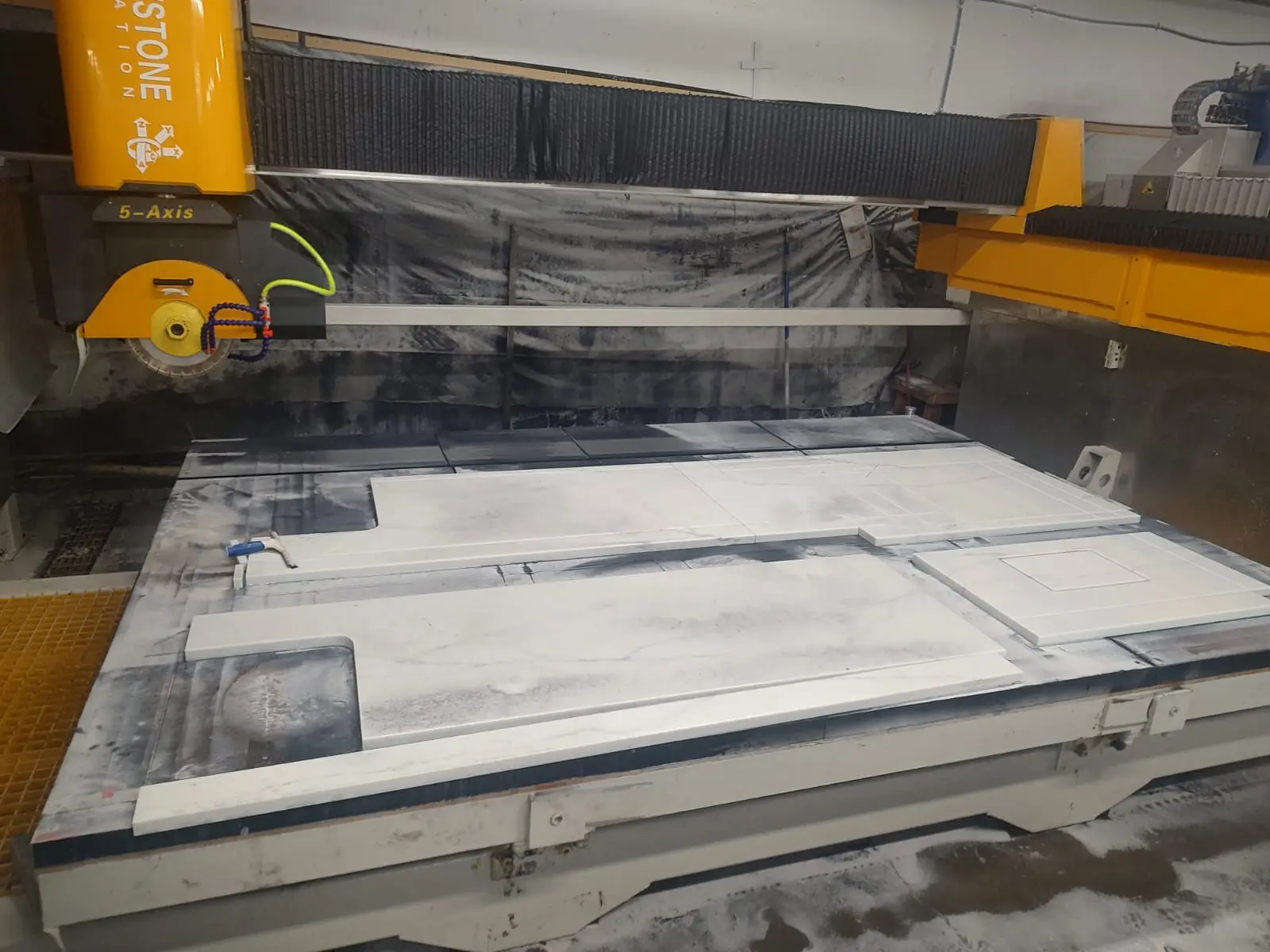
Using specialized CNC (computer numerical control) machines or waterjet technology, fabricators cut the sink opening into the stone slab. These machines use diamond-tipped blades or high-pressure water mixed with abrasive material to cut through the stone with incredible precision. This step ensures clean lines and exact sizing to fit undermount, drop-in, or farmhouse-style sinks.

polishing natural stone

Step 4: Polishing the Edges

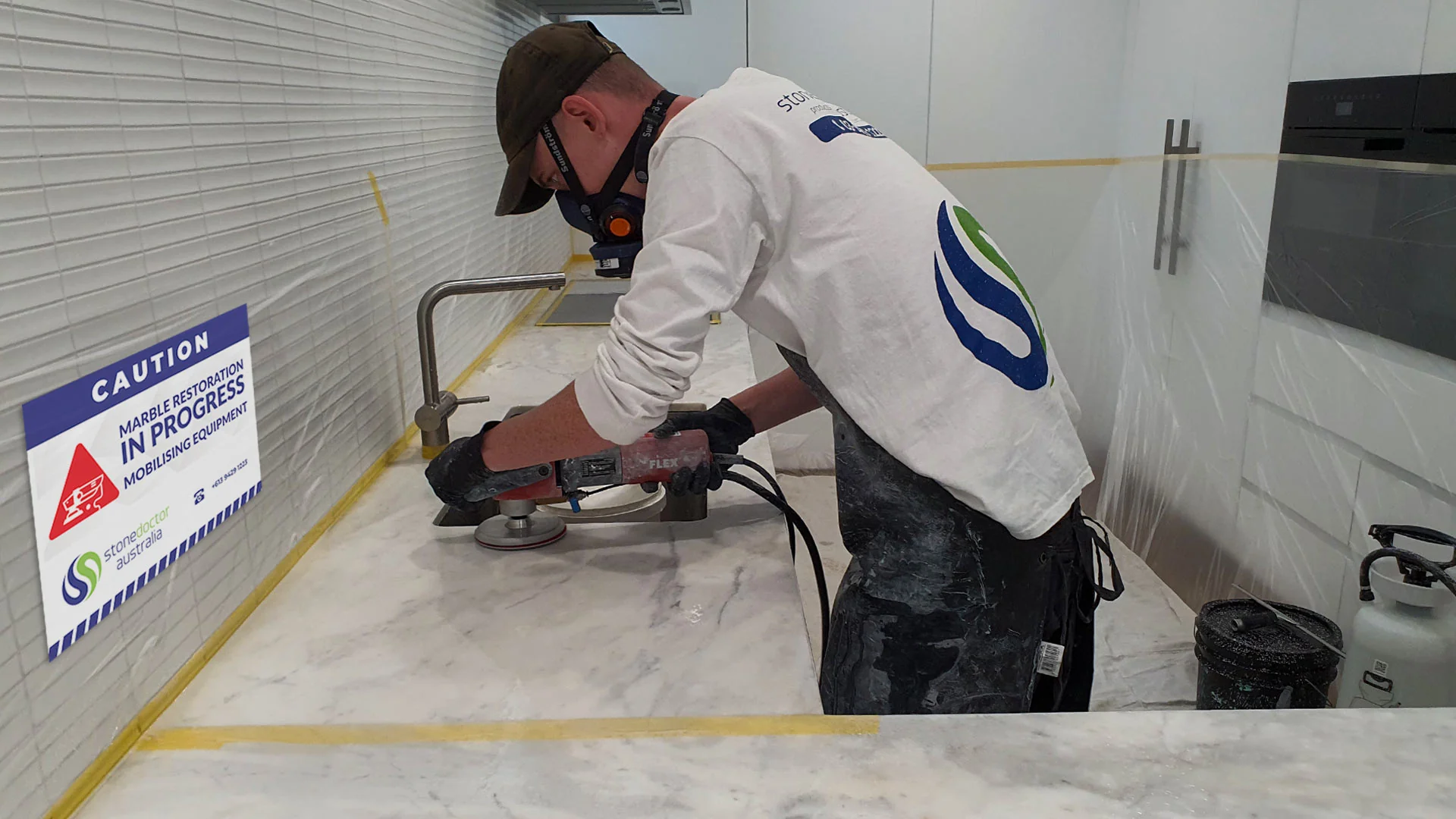
Once the cut is made, the inside edges of the sink opening are polished and finished. This step is crucial for both appearance and functionality. A smooth edge prevents chipping and makes cleaning easier, while the finish can be customized—whether you want a simple eased edge or something more decorative to match your countertop style.

Step 5: Reinforcement and Quality Checks

Because natural stone is heavy and the sink cutout creates a thinner section in the slab, reinforcement may be added to ensure strength and prevent cracking during transport and installation. Fabricators carefully inspect the piece before it leaves the shop to guarantee it meets both design and structural requirements.

Stone Slab Marble supplier in Chicago Illinois 05

Step 6: Installation

Finally, the fabricated countertop is transported to your home and installed by professional contractors. The sink is mounted and sealed in place, ensuring a water-tight and long-lasting result. Choosing experienced installers is essential—our blog on choosing the right contractor for stone installation explains why this step matters so much.

Bringing It All Together

From quarry to finished sink cutout, natural stone goes through a meticulous process of selection, cutting, and finishing to deliver the look and durability you expect. At Terra Stone, we proudly source premium slabs from Brazil, Italy, and Greece and connect clients with trusted fabricators who can bring their vision to life.

Visit our Schiller Park showroom in the Chicago area to explore our collection of marble, quartzite, granite, and porcelain slabs. Whether you’re planning a kitchen renovation or a luxury bathroom, our team is here to help you every step of the way.

Quartz vs. Granite: Which Is More Cost-Effective?

Quartz vs. Granite

When planning a kitchen or bathroom renovation, many homeowners ask: which is more cost-effective, quartz or granite? Both are popular choices, both are durable, and both bring beauty to any home—but they differ in important ways. At Terra Stone, a trusted natural stone provider in the Chicago area, we carry a premium selection of granite slabs and can guide you in comparing them to engineered quartz. Here’s how the two materials stack up.

Granite: Natural, Unique, Timeless

Granite is a natural stone quarried directly from the earth, cut into slabs, and polished for use in kitchens and bathrooms. Each piece of granite is unique, with colors and veining that cannot be replicated. Pricing for granite varies depending on rarity, color, and demand.

  • Cost: Can range from affordable to premium, depending on the stone’s rarity and source.
  • Durability: Heat resistant and highly durable with proper care.
  • Maintenance: Requires periodic sealing but offers a lifetime of performance.
  • Value: Granite is considered a luxury feature that adds resale value to a home.

Bottom Line: Granite’s one-of-a-kind character makes it a top choice for homeowners who want a natural centerpiece. For more on value, see our post on how natural stone increases home value.

Quartz: Engineered, Consistent

Quartz countertops are engineered stone, made from crushed quartz crystals mixed with resin and pigments. This process gives quartz slabs a consistent color and pattern, making it easier to match across larger projects.

  • Cost: Pricing tends to be more predictable and usually falls in the mid-to-high range.
  • Durability: Resistant to stains and scratches, ideal for busy households.
  • Maintenance: Non-porous and does not require sealing, making it easy to maintain.
  • Value: Popular among modern homeowners for its sleek look and practicality.

Bottom Line: Quartz is a good option for those who want a low-maintenance surface with reliable performance and consistent design.

Quartz vs. Granite 2

Long-Term Cost Considerations

When comparing cost-effectiveness, it’s important to look beyond the upfront price tag and consider maintenance, durability, and resale value.

  • Granite – Known for its toughness and heat resistance, granite makes an excellent kitchen surface. With regular sealing and care, granite can last for decades and is a strong selling point for homes.
  • Quartz – Quartz is also durable, with high resistance to scratching and staining. Its consistent crystalline structure gives it strength and makes it a versatile option for both kitchens and bathrooms.

Which Should You Choose?

If uniqueness and timeless character are most important, granite may be the better investment. Each slab is one-of-a-kind and adds natural luxury to your home.

If convenience, consistency, and low maintenance are top priorities, quartz may be more cost-effective in the long run. Its durability and ease of care make it a popular choice for modern kitchens and bathrooms.

Visit Terra Stone for Guidance

At Terra Stone, we specialize in premium granite slabs and can help you compare the benefits of granite to engineered quartz. Our Schiller Park, Illinois showroom is easily accessible to the Chicago area, and we ship nationally for homeowners, contractors, and designers across the U.S.

Visit us today to explore our hand-selected granite collection and learn which surface is the most cost-effective for your next project.

How To Enhance Your Home With Custom Marble Countertops

Terra Stone Slab Marble Quartzite Provider 4

Are you remodeling your kitchen and want an incredible high-end look to boost your home’s value? Consider the benefits of custom marble countertops. Keep reading to discover all the benefits of natural stone countertops, including what questions to ask when personalizing your marble.

How Marble Countertops Enhance Your Home

Marble is a high-end natural stone popular for its combination of form and function. Marble has several properties, making it an excellent investment for your remodeling project.

Superior Appearance

Marble evokes a sense of luxury and style. The marbling, from which it derives its name, creates unique and beautiful patterns and makes every slab different.

Marble has more variations than almost any other natural stone. Its palette ranges from a vivid white with thick, light gray grains to a deep black with thin white veins.

With so many options, you can define what luxury means for you.

Exceptional Life Expectancy

As a hard stone, marble lasts for a lifetime. Natural marble will endure a century when you properly care for it, while cultured marble stays strong for around 20 years, which is still impressive. For comparison, quartz and soft stone countertops like limestone last around 15 years.

When you invest in the highest quality marble, your countertops will last generations. Whether your children inherit your home or you plan to sell it, future homeowners will thank you for marble countertops.

Always Looks Clean

The one challenge with marble countertops is that they’re very vulnerable to staining. Even when they’re properly sealed, you should wipe up any spills immediately to avoid discoloration.

But consider the silver lining. If you’re forced to clean up messes immediately, your kitchen will always look pristine. Not only does this help you maintain a peaceful state of mind and a stress-free area to cook, but it also means you can have guests over any time without extra cleaning.

Environmentally Friendly

Because it’s a natural material that requires only a few additional steps for manufacturing, installing a marble countertop produces less carbon emissions than materials like laminate or butcher block.

But what about the sealer you treat your countertops with to help them last longer? It’s biodegradable and free of toxins that harm people and pets. When you choose marble countertops, your choice is good for your home and nature.

Personalization

Why is marble used in everything from countertops to floors, fountains, and statues? Because it’s so versatile.

Though it’s a hard stone, skilled artisans have been forming marble into unique and challenging designs for millennia. Marble is great for homes with uniquely shaped countertops or unusual kitchen layouts.

How To Choose Your Marble Countertops

If you’ve decided to invest in custom marble countertops, consider the following questions to determine the best type of marble and design.

How Big Is Your Budget?

You can obtain marble at many different prices, so even with a smaller budget, consider your options before ruling out this beautiful stone. You can find cultured marble for roughly half the price of all-natural marble. Though you’ll sacrifice the life expectancy of your counters, they’re just as beautiful and stylish as real marble.

If you have the budget, remember that installing marble countertops, especially customized ones, is an investment. You’ll save money because you won’t replace them in a couple of decades, and they significantly increase your home’s value.

What Type Do You Want?

In addition to choosing between real or cultured marble, you can choose from among several patterns. Some of the most popular options include:

  • Borghini: On the lighter end of the spectrum, this white marble contains dark gray veins and taupe highlights. It’s perfect for kitchens that utilize lighter or neutral tones.
  • Elba blue: This off-white marble incorporates large swathes of gray for an even, sweeping look perfect for a naturally-toned kitchen.
  • Grafite: This dark black marble has consistent and uniform thin white or beige streaks. It evokes a minimalistic style and is great for modern kitchens with darker motifs.
What Shape Do You Need?

Are you covering a simple rectangular counter, or will the designers incorporate unusual angles, sinks, or other layouts? While all marble responds well to crafting, countertop experts know the nuances of each stone variation and can help you find the best texture and style while providing the physical form you require.

Do You Want Upgrades?

You can enhance the look of marble with several upgrades when you install your countertops. Here are the most popular options:

  • Waterfall edges: Waterfall edges extend the marble from the top and cover the side of the counter, providing a flowing look and obscuring the mundane wood that supports your counter.
  • Curves: Modern trends utilize curved edges, while traditional countertops maintain a sharp corner. This effect gives a finished look that tells visitors that you pay attention to even the smallest detail.
  • Epoxy: In some cases, finishing your marble countertops can increase its style and durability.
Could You Utilize a Mosaic Look?

Use the mosaic technique to enhance your countertops with a matching marble black splash. This design method combines multiple types of marble tiles to complement the solid marble in the rest of your kitchen. If you love marble’s luxurious and high-end feel, a mosaic backsplash takes the feeling to the next level.

Do You Want Something Unprecedented?

Be bold and ask for what you want when it comes to marble. Even if you have yet to see it done, it doesn’t mean a skilled craftsman can’t create it for you. Because versatility is one of the defining features of marble, it’s likely that you can discover new styles and uses for the stone; it only takes an open mind and experienced specialist.

Contact Terra Stone Gallery for Amazing Marble Countertops

Terra Stone Gallery imbues any kitchen with incredible style and value as a high-quality marble and quartzite stone manufacturer. When you want custom marble countertops, we’ll help you find exactly what you want. To book a consultation, call (847) 721-1519.

Why You Should Consider Brazilian Quartzite

Patagonia

When it comes to natural stone, few materials offer the stunning beauty and durability of Brazilian Quartzite. Known for its unique patterns, vibrant colors, and unmatched strength, Brazilian Quartzite has become a highly sought-after material in the world of architecture and interior design. From luxurious countertops to striking flooring, this natural stone has found its way into homes and commercial properties alike, and for good reason.

Brazil, one of the world’s largest producers of natural stone, is renowned for its high-quality quartzite. But what makes this stone so special? Let’s explore the regions of Brazil where quartzite is primarily sourced and why it has become such a premium choice for various applications.

Key Regions in Brazil Known for Quartzite

Brazil is home to some of the finest quartzite deposits in the world. Minas Gerais, Espírito Santo, and Bahia are among the top regions where high-grade quartzite is mined. These areas have a rich history of stone production, with deposits that are prized for their color variations, texture, and patterning.

Minas Gerais, located in southeastern Brazil, is particularly famous for its stunning quartzite quarries. The state produces quartzite in a wide array of hues, ranging from soft creams and tans to striking blues, greens, and even bold reds. The richness of the color and the consistency of the texture found in quartzite from Minas Gerais make it highly desirable for luxury stone applications.

Espírito Santo, another important region, is known for its classic white and gray quartzite. This stone has a cleaner, more uniform appearance, making it ideal for projects requiring a more minimalist or contemporary design. The highly durable nature of Espírito Santo quartzite also makes it perfect for high-traffic areas like kitchen countertops and flooring.

In Bahia, a region known for its colorful and diverse stone offerings, quartzite with dramatic veining and vibrant color variations is often sourced. This quartzite is ideal for those looking to make a bold design statement with their natural stone.

Why Brazilian Quartzite Is So Sought After

Brazilian Quartzite is in high demand for several reasons. The combination of natural beauty and exceptional durability is one of its key selling points. Quartzite is a metamorphic rock, which means it’s been transformed under intense heat and pressure. This process gives it incredible hardness—making it much more durable than other stones. In fact, quartzite is often compared to granite due to its resilience and scratch resistance.

Aesthetic Appeal is another factor that makes Brazilian Quartzite so desirable. Each stone slab has unique patterns and color variations, ranging from sleek and uniform to bold, swirled designs. This unique veining and rich, natural tones can add a touch of elegance and sophistication to any space, making it a popular choice for luxury design projects.

Furthermore, Brazilian Quartzite is highly versatile. It can be used in a variety of applications including countertops, backsplashes, flooring, and even outdoor spaces. The variety of colors and finishes available means that it can complement any interior style, from traditional to modern. Its low maintenance nature and resistance to heat and staining also contribute to its popularity.

Terra Stone is Your Source for Premium Brazilian Quartzite

At Terra Stone, we pride ourselves on offering some of the finest natural stone available, and that includes a premium stock of Brazilian Quartzite. Whether you’re designing a new kitchen countertop or planning a luxurious bathroom remodel, our selection of Brazilian Quartzite offers something for every taste and style.

As a leading natural stone provider in the Chicago area, we work with top suppliers in Brazil to bring these high-quality slabs to our showroom. Our customers can choose from a wide range of colors, finishes, and textures, ensuring they find the perfect fit for their project.

Brazilian Quartzite from Terra Stone… A Cut Above

  • Premium Quality: Our quartzite slabs are carefully selected for their color, texture, and durability.
  • Exclusive Selection: Terra Stone offers exclusive access to some of the most stunning Brazilian Quartzite available.
  • Expert Guidance: Our team is dedicated to helping you choose the perfect stone for your needs and guiding you through the installation process.

If you’re looking for a premium natural stone for your next project, Brazilian Quartzite is a top-tier choice. Visit Terra Stone today to explore our stunning collection of Brazilian Quartzite slabs and get started on your dream design!

Choosing the Perfect Marble for your Kitchen or Bathroom

Calacatta Oyster

Choosing the perfect marble for your kitchen or bathroom is a crucial decision that can significantly enhance the beauty and functionality of your space. At Terra Stone Gallery, a leading natural stone wholesaler in the Chicago area, we offer an extensive selection of high-quality marble slabs. This guide will help you navigate the selection process, ensuring you find the ideal marble for your home.

The Most Popular Marble Regions in the World

Marble comes from various parts of the world each with unique characteristics. Two of the most popular regions for natural marble are in the Mediterranean, where Terra Stone specializes in sourcing natural stone through our generational partnerships overseas.

  • Italian Marble: Some of the most prestigious famous white marble comes from Carrara, Italy.
  • Greek Marble: Greek marble is highly revered by homeowners and contractors for it’s pristine, bright colors.
Choosing the Right Color

Marble is available in a wide range of colors, from classic white and grey to more exotic hues like green and pink. When choosing a color, consider the overall design of your kitchen or bathroom. Neutral colors like white and grey are versatile and timeless, while bolder colors can create a unique focal point.

Selecting the Finish

Marble countertops and surfaces are available in several finishes, each offering a different look and feel:

  • Polished: A polished finish provides a glossy, reflective surface that enhances the marble’s natural beauty.
  • Honed: A honed finish offers a matte, non-reflective surface, giving a more understated, contemporary look.
  • Leathered: A leathered finish has a soft sheen and textured feel, providing a rustic, tactile surface.
Visiting Terra Stone Gallery

At Terra Stone Gallery, we offer a wide selection of marble slabs to help you find the perfect match for your kitchen or bathroom. Our experts can guide you through the process, ensuring you choose a marble that fits your design preferences and lifestyle.

Choosing the perfect marble for your kitchen or bathroom is an exciting process that can transform your space. By understanding the different types, colors, and finishes, you can make an informed decision that will enhance the beauty and functionality of your home. Visit Terra Stone Gallery, your trusted natural stone wholesaler in the Chicago area, to explore our exquisite marble collection and start your transformation today.